
If Everything Counts the Same, Nothing Truly Counts
Democracy: Of the people, By the people, For the people. But which people?

Democracy is sold to us as the noblest political ideal ever invented. And in a sense, that is true. It promises dignity, participation, and equality. It tells every citizen, regardless of class, wealth, caste, education, or status, that their voice matters. That is a beautiful promise. But what if the crown of flowers tightens like a noose? What if the warmth is just how it draws you closer to burn? What if the mask is kinder than the face beneath? What if democracy is not just a flawed system that needs fixing, but a fundamentally misguided idea? Not morally misguided, but structurally.
Because at its core, democracy rests on a single, fragile assumption: that the collective decision of the majority is a reliable path to good outcomes.
Why should that be true?
If you gathered a thousand random people and asked them how to perform a cardiac surgery for you, would you lay down on the table? If you filled a stadium and asked the crowd to design an aircraft for you, would you believe the final blueprint would fly? If you assembled a crowd and asked them to restore a centuries old painting, would you expect the artwork to survive intact? If you asked a room full of random people to defuse a bomb, would you have a peaceful night’s sleep in the same room? If you stood in a marketplace and asked strangers to code a cryptographic security for a bank, would you store your savings under those rules?
Of course not.
So why does this logic suddenly become acceptable when the stakes are infinitely higher - when the question is not about a machine or a building, but about the direction of an entire nation or a state?
By letting a marketplace vote on the shape of a key, you would end up with something that fits every opinion, but opens no lock at all. Because, democracy doesn’t test for understanding. It doesn’t filter for competence. It doesn’t reward depth.
It counts. That’s all it does.
It reduces one of the most complex tasks imaginable - governing a society, to a simple numbers game. It assumes that if enough people agree on something, that thing must carry weight. But agreement is not evidence. Consensus is not correctness. Popularity is not proof.
If ten thousand people confidently believe something false, democracy doesn’t correct them. It empowers them.
That is not a minor flaw. That is the foundation of the very idea of democracy.
You might say, democracy gives power to the people. That sounds noble until you ask a sharper question: Which people? The informed or the uninformed? The thoughtful or the impulsive? The patient or the reactive? Because democracy does not distinguish between them. It treats a deeply considered decision and a careless guess as identical inputs. It gives equal authority to someone who understands policy consequences and someone who votes based on a catchy slogan they heard ten minutes ago.
Imagine a courtroom where expert’s opinion and random shouting from the audience carried the same weight. Imagine a hospital where trained surgeons and bystanders voted on how to proceed with an operation. Imagine boarding a flight where passengers collectively decide how to land the plane.
That is not called fairness, that is called insanity.
But again, the logic changes when it comes to democracy.
And yet, this is exactly how nations are run.
We pretend that giving everyone an equal say somehow transforms unequal understanding into equal wisdom. It doesn’t. It simply hides the imbalance behind a moral narrative. The truth is far less comforting: in a democracy, the uninformed do not just participate. They dilute.
They don’t need to dominate the conversation to shape the outcome. They only need to exist in larger numbers. And in democracy, these numbers, are everything.
A policy that requires ten minutes to explain will lose to a slogan that takes five seconds to chant. A reform that takes ten years to show results will lose to a benefit that appears tomorrow. A leader who speaks honestly about trade-offs will lose to one who promises everything at once.
Okay, let’s take this example of two political parties, one of who claim to invest in the quality of education and the effects will be noticed in the next two decades. The other says that they would invest in some dam or metro construction project, whose effects will be noticeable immediately. Guess what the people would choose in practical cases? The second. And even if they pick the first, they wouldn’t notice the changes during that period, and would switch to the second, claiming that the first one is inefficient. And when this happens, even the educational reforms that happened in the last tenure, would revert to normalcy.
A simpler thing to ask - if you ask a child to pick between ice cream and vegetables, the child would pick ice cream instantaneously. Yeah, that’s what would reward them on the short term. And what if you ask them the same question every day? They’ll pick the ice cream every day as well. But, the rational option - the healthier, and the more nutritious one, that gets discarded.

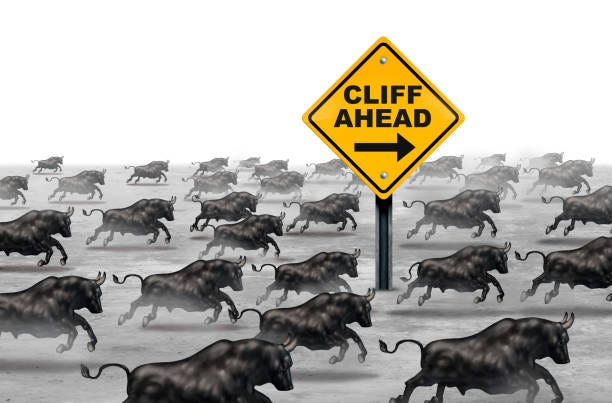
Democracy rewards these short term goals, over the long term goals. And if the system responds more strongly to emotional triggers than to rational arguments, then emotional triggers will dominate. If the system rewards visibility over substance, then visibility will replace substance.
Of course, you don’t get good governance from a system that incentivises performance over competence. You get spectacle. But it is not the thunder that grows the flower, it is the rain. It is not the applause that guides a ship, it is an efficient captain who does.
Now the next flaw - the idea of choice. People speak as if elections are moments of freedom, where citizens carefully evaluate options and select the best path forward. But how real is that choice? A significant number of voters don’t even know the names of the people who represent certain political parties, they don’t even know the ideologies. And worse, they don’t even know that certain people who are the face of these political parties are no more. They cling behind the name of the political party or the logo.
And in most cases, the options are not real options. It is having to pick the least uncomfortable, the best of the worst. That is not freedom, that is damage control. And when someone refuses to play that game, they would choose NOTA, saying that “none of these are acceptable”. Guess what happens to them? They are mocked.
As if rejecting bad choices is somehow weaker than accepting them. That’s like being handed a plate of burnt food and being told you must eat it because those are the only options available. And when you refuse, people laugh at you instead of questioning why the food is burnt in the first place.
Then the next day, the same burnt food is served again. Why wouldn’t it be? No one forced the kitchen to improve. NOTA, in its current form, is not power. It is frustration made visible but ineffective, it is the system allowing you to protest without allowing you to disrupt. A real system of accountability would fear rejection. It would respond to it. It would be forced to correct itself. Democracy, as it stands, absorbs rejection and continues. That is not strength, that is indifference. Silence toward the unworthy is louder than applause for the flawed.
And there is this another sect of people who say “You are wasting your vote by voting for NOTA”, or “Your NOTA makes no difference. Even if they are the majority, the second best one comes to power”. To those people, take the example of grade 10 board exams. Someone who scored 36% would get the same result “Passed” as someone who scored 95%. The results are the same, but the guy who barely passed, would be the one who would introspect, saying that “If I continue being like this, I might fail in grade 12”. And the one who scored 95%, he might get lethargic, claiming that he’d succeed no matter what he does. And that is exactly where these numbers fail. The best opinion in such cases is not having an opinion.
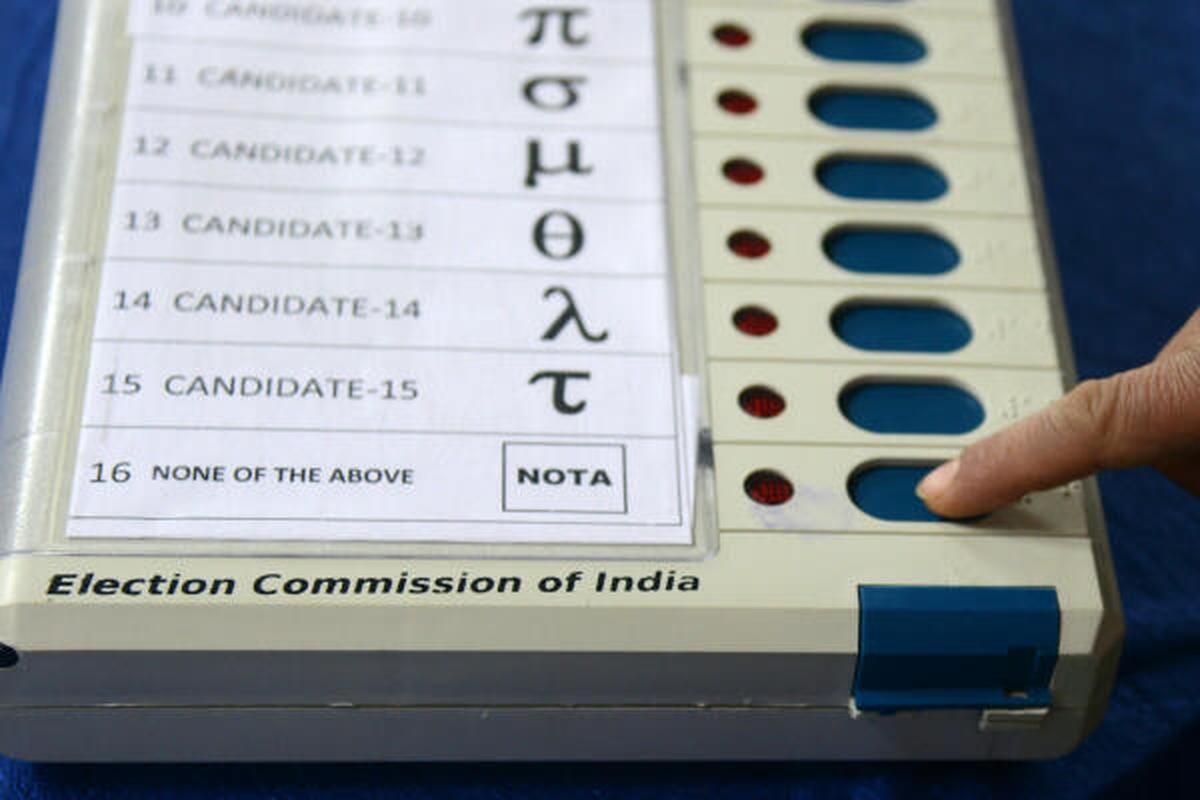
A vote is not a ritual to be completed, it is a thing to be earned. NOTA is what happens when no one earns it or deserves to earn it. A person won’t and can’t decorate mediocrity with their consent just so that others can feel better about their participation.
Back to square one, the question remains the same: Why should everyone have an equal say in something they may not understand?
We don’t apply this principle anywhere else. We don’t let untrained individuals perform surgery in the name of equality. We don’t let anyone walk into a cockpit and take control because they have a stake in the journey. We don’t remove standards from the defence forces, or the space force, because excluding the unqualified would be “unfair”. So why does politics operate on the opposite logic? Why is the one domain that affects everything - economy, law, security, education, also the one domain where qualification is considered offensive? This is not compassion. It is contradiction.
Democracy does not fail because people are evil. It fails because it assumes people are something they are not - Perfectly rational, consistently informed, immune to manipulation, willing to think long-term. No, they are not.
And this is where the argument reaches its most uncomfortable edge: If a system gives equal power to unequal understanding, then it will always drift toward the lowest level of thinking, and reduce to the masses. That is how complex nations get reduced to simple slogans. That is how serious policy gets replaced by emotional theatre. That is how the long term future of millions is quietly traded for short term satisfaction.
And here is the part people don’t like hearing: a large portion of voters do not vote for the nation. They vote for themselves. Not in the enlightened sense of aligning personal growth with national growth, but in the narrowest possible way: “What do I get?”, not “What works?” or “What sustains?”, but just “What benefits me, right now?”
And when millions of such decisions stack together, you don’t get leadership. You get a deal, a transaction. That becomes a marketplace where votes are exchanged for comfort, where policies are reduced to giveaways, and where the future is chipped away piece by piece to satisfy the present.
A nation cannot sail like that. A nation is not a kitchen where everyone throws in ingredients they like. It needs a recipe, balance, restraint. But if every taste gets priority, the dish doesn’t improve. It gets ruined. It’s like ten cooks adding sugar, salt, spice, oil, whatever they prefer, without even understanding the dish.
This is why the idea of qualified voting cannot be ignored - not as punishment or as exclusion, but as a responsibility. In my humble opinion, there should be a criteria that voters must meet certain needs to vote. Because, a vote is not just a right. It is power. And power, like everywhere else in life, is earned.
You don’t hand over a loaded weapon to someone who doesn’t understand what it can do. You don’t give control of a machine to someone who has never learned how it works. You don’t let anyone walk into a control room and start pressing buttons just because they feel involved. And a system that demands nothing from its participants cannot expect anything meaningful from its results.
Now comes the emotional counter argument: “What about the underprivileged? What about those who didn’t get the chance to learn? Are you taking away their rights?” It sounds powerful. But look deeper. Not every vote strengthens a nation. Some of these votes nullify the votes of the learned and the deserving voters, for their values are going to be the same. And when millions of such votes pile up, they don’t create balance, they create pressure and tilt the system.
And here is something even more important: Voting is not the only way to shape a society. People act as if the moment you limit voting, you silence voices. That is simply not true. History has already shown otherwise. There were times when groups did not have voting rights, yet they shaped the direction of entire nations through protest, organisation, and influence. Women in the United States pushed strongly for alcohol prohibition before they even had full voting rights. They were not powerless. Because power is not just a vote, it is voice, action, and influence.
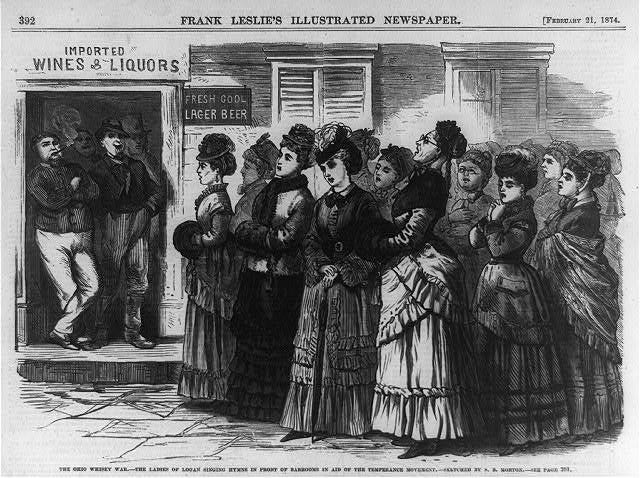
And that is the part democracy conveniently ignores - it convinces people that power begins and ends at the ballot box. That without a vote, you are voiceless. That without a vote, you are irrelevant. That is not empowerment, that is dependency. A vote is the final act. Influence is everything that comes before it.
No one is silenced by being unqualified. They are only being told one thing: earn the right to decide. That is not oppression, that is expectation. We demand it everywhere else. We demand it in science, in medicine, in law, in engineering. We demand preparation before power. But in democracy, we remove the preparation and still hand over the power. And building a system on that assumption is like building a bridge on sand and acting surprised when it shifts.
If anything, a system that requires qualification does not weaken society, it strengthens it. Because it sends a message that participation is not a ritual, it is a responsibility. That influence is not automatic, it is earned. That decisions which shape millions of lives cannot be made casually, impulsively, or blindly. Because a nation is not a moment. It is a direction. And direction cannot be decided by those who cannot see beyond the next step.
So the question is no longer whether everyone deserves a voice. They do. The question is whether every voice should carry the same weight in decisions that demand understanding, discipline, and foresight.
And if we are honest, the answer is uncomfortable. Because equality sounds noble. But when applied blindly, it can become destructive. A system that treats all input as equal will never produce consistently intelligent output. A system that refuses to filter will always be vulnerable. And a system that fears asking people to qualify for power will always be ruled by those least prepared to use it.
So no, limiting voting is not silencing people. It is drawing the line between presence and participation, between impulse and insight. Because in the end, this is not about taking power away, it is about protecting what power is supposed to do.
And if a system bows to every impulse, it does not stand for anything.
Loved your article ! "Which people? The informed or the uninformed? The thoughtful or the impulsive? The patient or the reactive?" Would request you to bolden it because this is the essence of your writing . I love how you questioned the idea of democracy and it has somehow convinced me in doing so .
I am 21 yet I refused to apply for a voter id because I got mocked by people when i said that i wanted to vote for NOTA. How can i vote to a political party knowing the ruling party only won cuz it spent 2000rs per vote, while the opposition only gave away 1000rs per vote. This article really depicted democracy in its truest form.